

A $4.4 Billion Bet on Power Conversion
Flex has agreed to acquire EPC Power for $4.4 billion, bringing a grid-forming inverter maker with more than 15 GW deployed across 62 countries into its Cloud and Power Infrastructure segment.
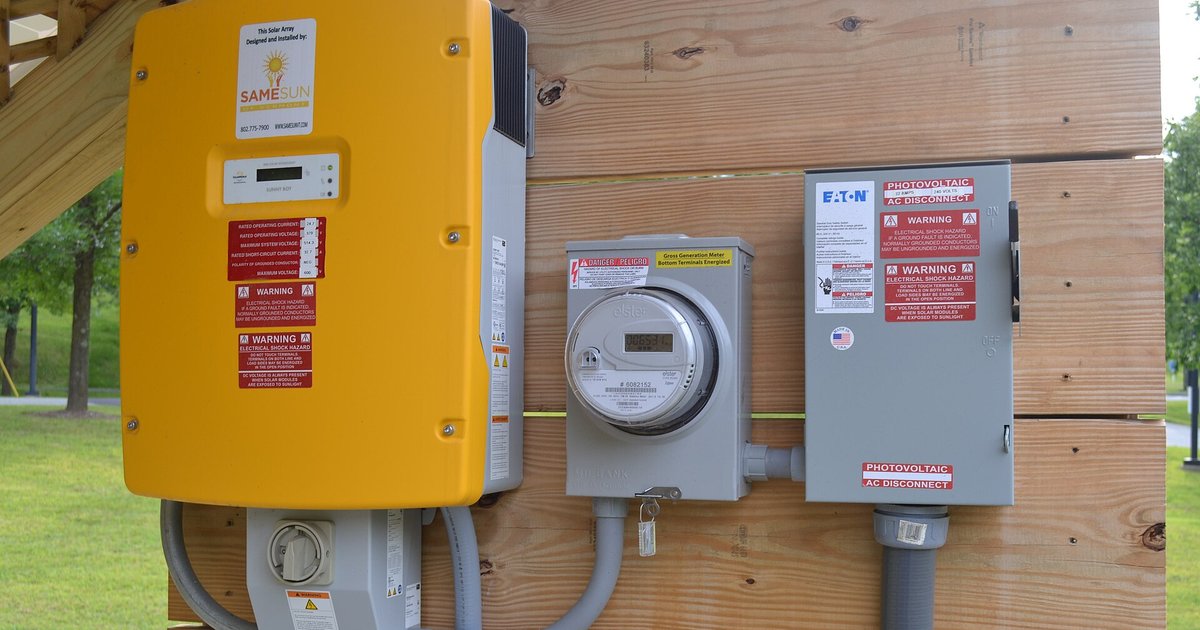
Flex has entered a definitive agreement to acquire the US power-conversion manufacturer EPC Power for $4.4 billion, subject to customary closing conditions including regulatory approvals, with completion expected in the fourth quarter of 2026. EPC Power will operate as a business within Flex's Cloud and Power Infrastructure segment. The company is said to have more than 15 GW deployed across 62 countries, with annual US manufacturing capacity expected to surpass 30 GW in 2027. Its key product line is the Agile Grid Forming system, sold into data centre, on-site energy storage, microgrid and grid-support configurations. Devin Dilley, co-founder, president and chief innovation officer of EPC Power, called it a landmark moment for the company.
The technology worth explaining is in the product name. A conventional grid-following inverter synchronises to the voltage and frequency it detects on the network — it needs a grid to exist before it can connect to one. A grid-forming inverter establishes the voltage and frequency itself, behaving like a synchronous machine rather than a current source. That distinction has become the central question in power systems engineering, because as synchronous generators retire the grid loses the rotating inertia that has always stabilised it, and grid-forming inverters are the replacement mechanism. They are also what allows a microgrid to run islanded, and what allows a data centre to hold its own supply up through a disturbance.
The price is the signal. $4.4 billion for an inverter manufacturer is a statement that power conversion has moved from a component to a strategic position, and the reason is visible in the named application: data centres. A large AI facility is a power-electronics problem before it is a computing problem — the load is enormous, it varies fast, grid connections are the binding constraint, and on-site storage plus grid-forming conversion is how a site becomes connectable at all. Flex already builds the racks and the infrastructure; owning the conversion layer lets it sell the electrical system rather than assemble one.
For industrial readers the transferable point concerns supply and standards rather than the transaction. Inverter capacity is being absorbed by the data centre build-out, and anyone planning solar, storage or a microgrid over the next few years should expect lead times and pricing to reflect that competition for the same factories — the 30 GW capacity figure exists because demand is expected to fill it. The second point is a technical one worth raising with any storage supplier now: whether their inverters are grid-forming capable, and under which grid code they are certified. That question is moving from advanced to routine, and a system bought as grid-following may not be permitted to provide the services that make it pay in five years.