

A Coriolis Meter for the Middle of the Range
KROHNE's OPTIMASS 5400 is a twin semi-bent tube Coriolis meter rated to 180 °C and 100 barg, optionally ±0.1 percent above 10 percent of nominal flow, and a flange-to-flange swap for the OPTIMASS 1000.
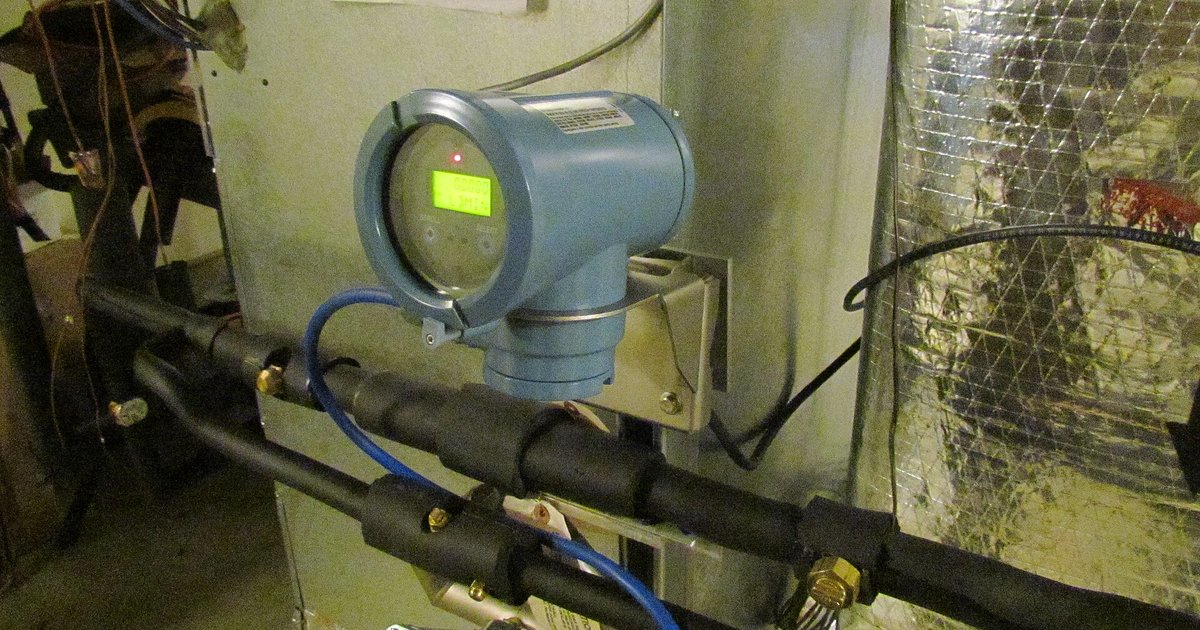
KROHNE has launched the OPTIMASS 5400, a Coriolis mass flowmeter with a twin semi-bent measuring tube aimed at standard liquid and gas duty between the company's entry-level and high-end lines. It measures mass flow, density and temperature, offers an optional mass flow accuracy of ±0.1 percent for flow rates above 10 percent of nominal, operates to +180 °C and 100 barg with a sensor housing rated to 200 barg burst, and is available in compact and remote converter versions. Communications cover HART 7, Modbus, FOUNDATION Fieldbus, PROFIBUS-PA and DP, PROFINET including PROFINET over Ethernet-APL, and EtherNet/IP. The meter includes Entrained Gas Management, integrated Bluetooth, modular electronics and OPTICHECK diagnostics, and is targeted at chemical, oil and gas, marine, food and beverage and pharmaceutical applications.
The specification that will decide most purchases is not the accuracy figure but the phrase "flange-to-flange replacement for existing OPTIMASS 1000 series installations". Replacing a flowmeter is rarely a meter problem; it is a pipework problem. A meter with different face-to-face dimensions means cutting and rewelding, which means a hot work permit, a line break, a pressure test and a shutdown — and that cost routinely exceeds the price of the instrument by a wide margin, which is why obsolete meters stay installed for years after they should have been replaced. Dimensional compatibility converts a capital project into a maintenance task.
The ±0.1 percent qualifier is the second thing worth reading precisely. Accuracy specified above 10 percent of nominal flow says nothing about behaviour below it, and Coriolis meters are characteristically less accurate at low flow because the phase shift being measured is proportional to mass flow rate while the noise floor is not. A meter sized for a peak that rarely occurs will spend most of its life in the part of the range where the specification does not apply. Sizing for the actual normal flow rather than the design maximum is the single most effective way to improve a Coriolis installation's real-world accuracy, and it costs nothing.
Entrained Gas Management is the feature that matters in practice more than the datasheet suggests. Gas bubbles in a liquid stream are the dominant cause of Coriolis measurement error and of the outright measurement dropouts that erode trust in the instrument, and they are common wherever a pump cavitates, a tank runs low, or a line is restarted after draining. A meter that degrades gracefully and reports that it is doing so is considerably more useful in a real plant than one that reports a confident wrong number — and the reporting is the part to check during commissioning rather than after the first disputed batch.