

A Cortex-A55 That Idles at a Milliwatt
Renesas has launched the RZ/G3L and RZ/G3SE, quad- and dual-core A55 parts rated −40 to +125 °C with about 1 mW standby, dual TSN-capable gigabit Ethernet and three CAN FD ports, from $14.28.
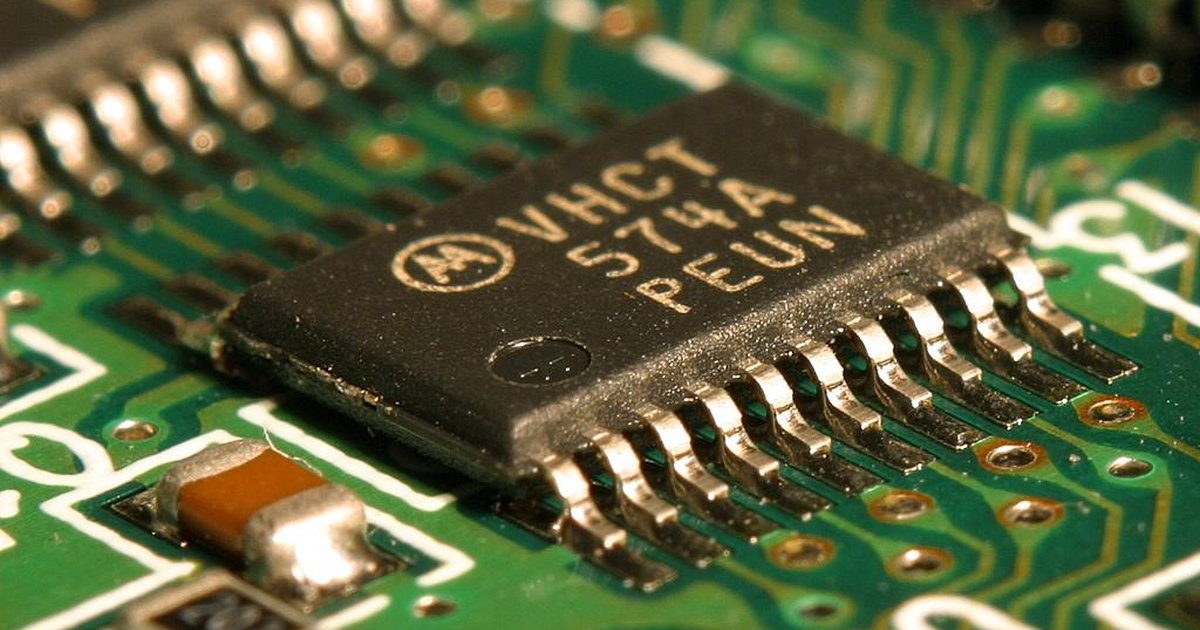
Renesas has introduced two new microprocessor families aimed at industrial human-machine interfaces and gateways. The RZ/G3L and RZ/G3SE each come in four variants built around quad-core or dual-core Arm Cortex-A55 cores at up to 1.2 GHz, alongside a Cortex-M33 at 200 MHz for system management. The RZ/G3L adds an Arm Mali-G31 GPU at 600 MHz supporting Vulkan 1.2, OpenGL ES up to 3.2 and OpenCL 2.0, plus an H.264 codec handling 1920×1080 at 30 fps in both directions; the RZ/G3SE drops the GPU and the codec. Both carry 512 KB of on-chip system RAM with ECC, a 16-bit external memory interface supporting DDR4-2133 to 4 GB or LPDDR4-2133 to 2 GB, three SD/MMC host interfaces with eMMC 5.1, two gigabit Ethernet ports with TSN support, three CAN FD interfaces, MIPI DSI and an LVDS output to 1280×800. Standby power comes down to around 1 mW, the operating range is −40 to +125 °C, and the parts ship in 368- and 400-pin LFBGA packages at $15.92 to $21.65 for the RZ/G3L and $14.28 to $20.03 for the RZ/G3SE in thousands, with roughly fourteen-week lead times.
Three of those numbers are the ones that decide designs. The 125 °C upper limit is unusual for an applications processor and is what allows a part like this inside a sealed enclosure, next to a motor, or in a cabinet in direct sun without a fan or a derating argument. The 1 mW standby figure matters for anything that must sit dormant and wake on an event — a panel that sleeps overnight, a gateway on a battery-backed supply — because at that level the processor stops being the dominant term in the power budget. And the ECC on the on-chip RAM is a quiet reliability feature that is worth more in a ten-year industrial product than any benchmark.
The combination of dual TSN-capable Ethernet with three CAN FD ports is also a specific statement about where these are meant to go. That is the profile of a protocol gateway or a machine controller bridging a legacy CAN network to a deterministic Ethernet backbone, rather than a general-purpose applications board. Two Ethernet ports allow a daisy chain, which is how industrial devices are actually cabled.
For anyone specifying at this level, the useful comparison is not raw performance — a 1.2 GHz A55 is modest and deliberately so — but total system cost and longevity. A part in this class is chosen because it runs mainline Linux, tolerates the environment, integrates the interfaces that would otherwise be external chips, and will still be purchasable in ten years. The fourteen-week lead time is the figure to check before committing, because it is the one most likely to have changed by the time a design is ready to build.