

A Record 20.2 Gigawatt-Hours of Grid Batteries in One Quarter
The US added 6.7 GW of instantaneous power in Q2 2026, roughly a tenth of the entire national storage fleet in three months, with seven individual projects each above 1 GWh.
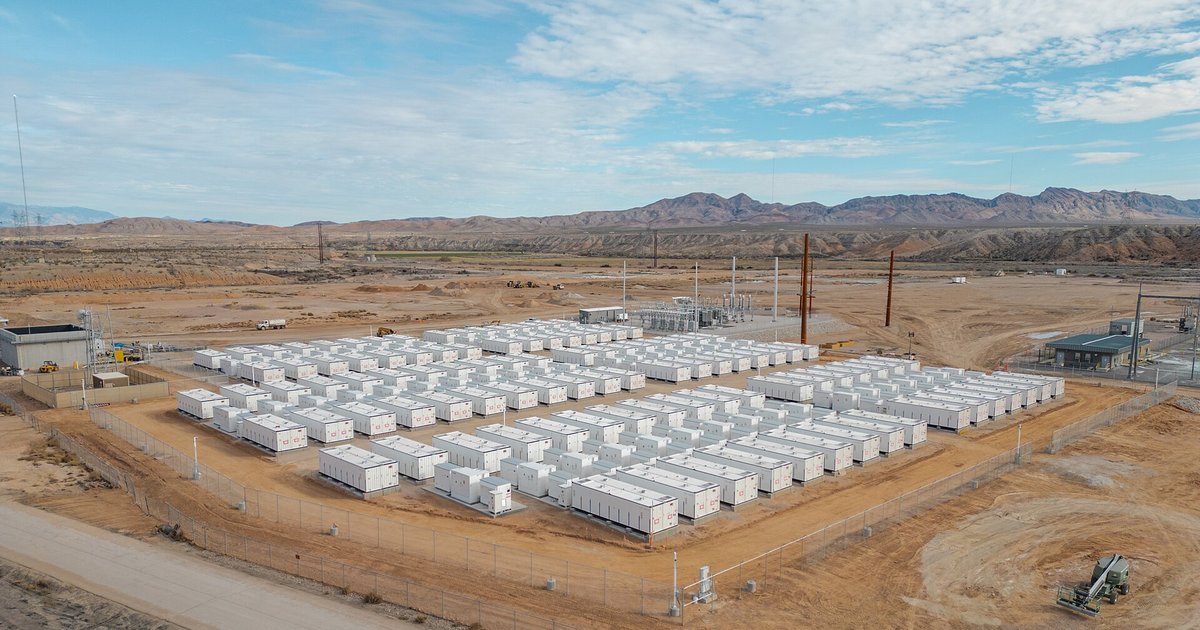
The US power sector added 20.2 GWh of battery capacity in the second quarter of 2026, the largest quarter on record, according to data from the Solar Energy Industries Association and Benchmark Mineral Intelligence. That is 6.7 GW of instantaneous power capacity, and roughly one tenth of the entire US grid storage fleet installed in three months.
Seven individual projects each exceeded 1 GWh. That detail matters more than the total, because a gigawatt-hour project is a different engineering and procurement object from the 100 MWh installations that characterised the market a few years ago — different interconnection studies, different fire and spacing standards, different supply chain commitments, and a different conversation with a transmission operator. A market where seven of those reach commissioning in a single quarter is a market that has industrialised.
Benchmark Mineral Intelligence raised its cumulative installation forecast through 2030 by 11.5 per cent compared with its report three months earlier, which is a substantial revision over one quarter and suggests the analysts had been underestimating the build rate rather than the demand signal.
Two distribution figures are worth noting. Seventy-four per cent of the quarter's storage additions landed in states that voted for the current administration, including Texas, Utah and Arizona — a reminder that grid storage siting follows interconnection queues, land, solar resource and market design rather than politics. And 44 per cent of new capacity was built alongside solar plants, which is the configuration that makes the strongest economic case: the battery shares the interconnection, the land and the balance of plant with a generator whose output profile it exists to reshape.
For industrial energy users the practical consequence is on the demand side. A grid with rapidly growing storage has different price behaviour: evening peaks flatten, intraday spreads compress as arbitrage capacity grows, and the value of demand response shifts from energy to faster products. Anyone whose site economics depend on avoiding peak charges or selling flexibility should expect the arithmetic to move.
Public support cited includes a $490 million Department of Energy loan to a Puerto Rico battery project and grant funding for Form Energy's iron-air project in Maine. Large-scale storage capacity has nearly doubled over the past eighteen months.
Source: Canary Media