

A Test Rig That Runs Unattended to 45 Tonnes
Kalmar has opened a test centre in Ljungby that runs accelerated lifetime testing of container handling equipment around the clock without an operator, at loads to 45 tonnes and from arctic cold to desert heat.
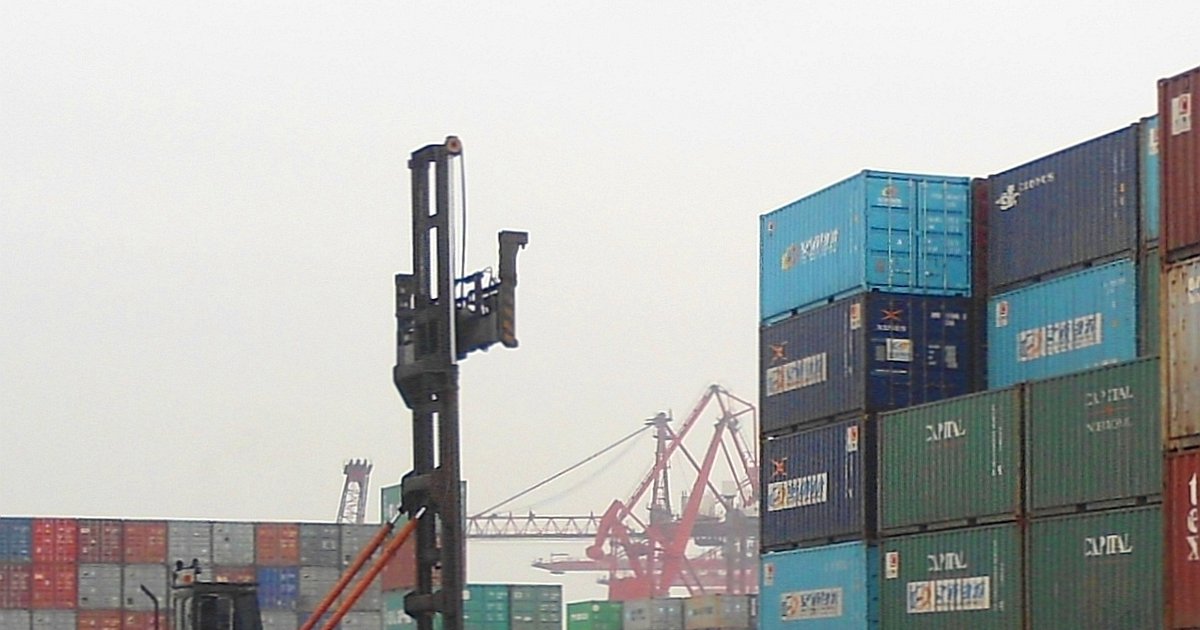
Kalmar has opened a test centre adjacent to its Innovation Centre in Ljungby, Sweden, running fully automated and unattended accelerated lifetime testing of counterbalanced container handling equipment around the clock. The facility performs driving simulations and structural testing at loads up to 45 tonnes across environmental conditions from arctic cold to desert heat, and covers both the electric and diesel counterbalanced product lines. Alf-Gunnar Karlgren, president of counterbalanced, and Sami Niiranen, president and chief executive, are quoted; the investment figure and floor area were not disclosed. Kalmar says it is the first OEM in the industry to offer this capability.
The engineering logic is straightforward and applies well beyond container handling. Reliability data on heavy equipment normally arrives from the field, which means it arrives years after the design decision that caused the problem, from customers who are experiencing the failure, in a form that is hard to attribute because every machine has a different duty history. An accelerated rig inverts all three: the load spectrum is known exactly because it was programmed, failures appear in weeks rather than years, and a design change can be tested against the identical profile that broke the previous version.
The unattended part is what makes it economic rather than merely possible. Accelerated testing needs cycles, and cycles need time on the rig; a facility that runs only during staffed hours delivers roughly a quarter of the cycles of one that runs continuously. Automating it converts calendar time into test time at close to a one-to-one ratio, which is the difference between validating one design iteration before launch and validating four.
The caution that belongs with any accelerated programme is that the acceleration has to be honest. A rig reproduces the load cases it was told to reproduce, and real equipment fails from things the programme may not include — corrosion combined with cyclic load, an operator using the machine in a way the duty profile did not anticipate, contamination, maintenance that did not happen. A rig will find structural and fatigue problems reliably and will systematically under-represent everything that depends on the environment being dirty and the operator being human. The right posture is that it replaces the slow half of field learning rather than field learning itself — which is also why the electrification angle matters here: the electric counterbalanced line has far less field history than the diesel one, and a rig is the only way to get its reliability data before customers do.