

Lyte Raises $165 Million for Robot Perception Silicon
A Series C at $1.6 billion funds custom processors and sensors that combine 4D coherent vision, imaging and inertial sensing on one synchronised timeline — the alignment problem, solved in hardware.
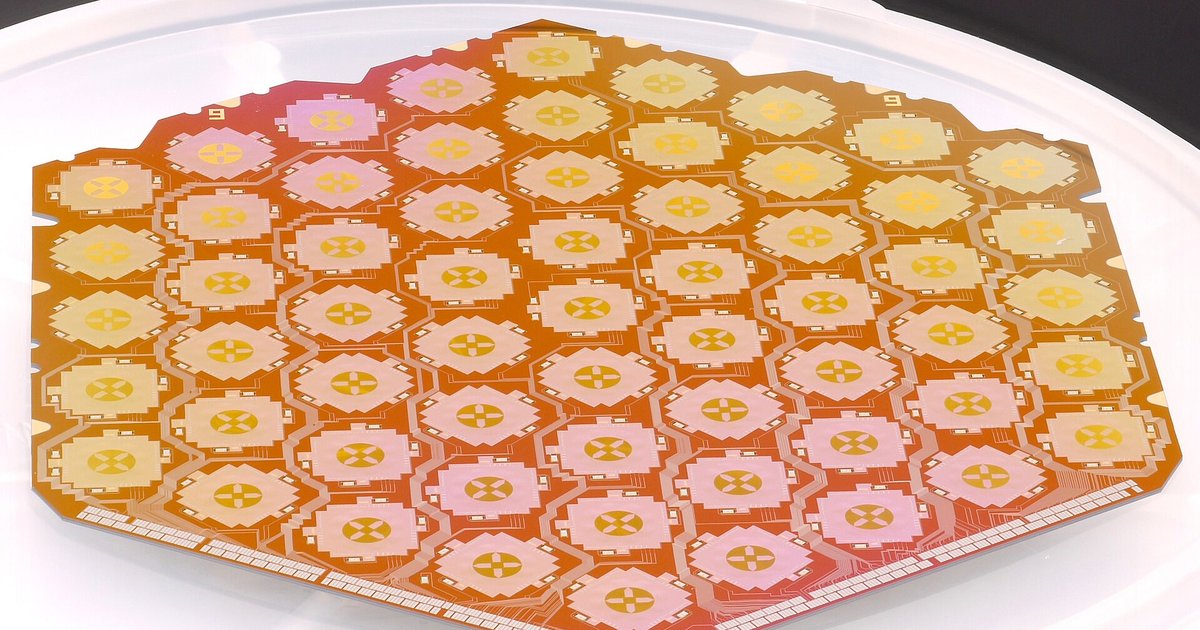
Lyte AI has raised $165 million in a Series C at a $1.6 billion post-money valuation, led by Maverick Silicon with Fidelity Management & Research, Atreides Management, Key1 Capital and Ora Global participating alongside existing investors. The Sunnyvale company, founded in 2021, has now raised $272 million in total, including $107 million announced in January.
What it builds is custom processors, multimodal sensors and software for robot perception. The platform, LyteVision, integrates 4D coherent vision, high-resolution imaging and inertial sensing on a synchronised timeline — and that last phrase is the engineering claim worth extracting from the funding announcement.
Multi-sensor perception has a chronic alignment problem. A camera, a depth sensor and an inertial measurement unit each produce data on their own clock with their own latency, and fusing them requires knowing precisely when each sample was taken relative to the others. On a stationary robot the errors are small. On a moving one, a few milliseconds of uncertainty between the camera and the IMU becomes centimetres of position error, and the fusion algorithm spends its effort compensating for the sensor stack rather than understanding the scene. Solving synchronisation in silicon rather than in software removes an error term that otherwise propagates into everything downstream.
The 4D coherent element is the same family of technique as the Doppler-per-pixel sensors that appeared on this year's VISION Award shortlist: measuring velocity directly from coherent detection rather than inferring it by comparing frames. For a robot deciding whether an object is approaching, having velocity in the first measurement rather than the second frame is a meaningful reduction in reaction time.
The company says it is in production and shipping to customers in inspection, logistics and manufacturing, and its platform was recognised as a CES 2026 Best of Innovation award winner in robotics. Proceeds go to scaling production, advancing AI capabilities and expanding deployments, with hiring planned across silicon, software, optics, manufacturing and operations.
Chief executive Alexander Shpunt put the thesis plainly: a robot cannot act safely on data that does not faithfully describe the world. That is an argument for spending money at the sensor rather than on a larger model downstream, and it is a position the industry has been slowly converging on.
Source: The Robot Report