

Quectel Puts RTK, LTE and LoRa Under One 120 Millimetre Dome
The QLM290P packages quad-band GNSS/RTK, a global LTE module and a LoRa radio on one pre-validated board, configurable as base station or rover over the embedded cellular link.
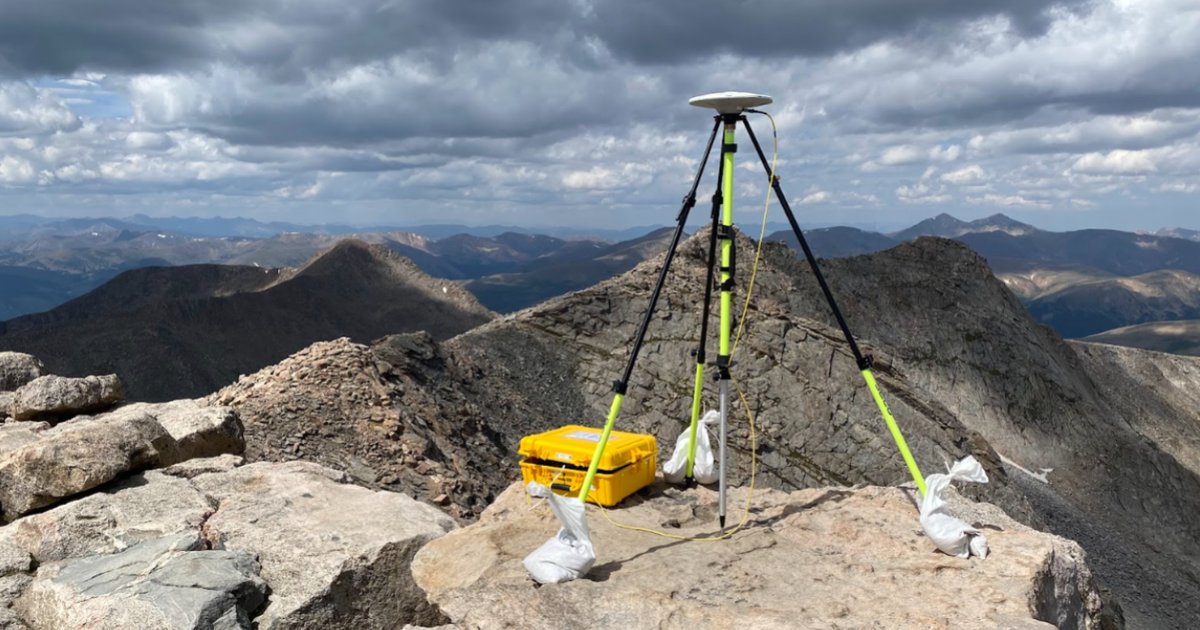
Quectel introduced the QLM290P (03) on 15 September, a smart antenna device roughly 120 mm across and weighing about 220 grams, with high-precision positioning, cellular and a local radio link on a single pre-validated PCBA.
Inside are Quectel's LG290P (03) GNSS module, a LoRa module, a global-version LTE module and a full-band GNSS antenna. The receiver handles concurrent reception of L1, L2, L5 and E6 GNSS quad-band signals across GPS, GLONASS, Galileo, BeiDou, QZSS and NavIC, with SBAS support for WAAS, EGNOS, BDSBAS, MSAS, GAGAN and SDCM. Multi-mode quad-band RTK algorithms deliver centimetre-level positioning, including in urban canyons and heavily obstructed areas. An integrated diplexer and SAW filters handle interference. Host interfaces are RS-422, RS-485, RS-232 or UART TTL, and the operating range is -40 to +85 degrees Celsius.
The LTE module does two jobs: it carries NTRIP/RTK correction services without a separate communications subsystem, and it lets the same hardware be configured as either a base station or a rover. LoRa, across the 863 to 928 MHz band range, provides a local machine-to-machine channel.
IoT Business News characterised the strategy directly: instead of supplying the positioning component and leaving the OEM to build the surrounding RF, antenna and cellular architecture, Quectel is packaging several of those functions into a ready-to-integrate platform.
That is the practical value. Getting centimetre RTK working in a field, a quarry or a container yard is usually an RF integration project — antenna placement, backhaul, correction feed, local link — and every one of those steps is where a schedule slips. Target applications are robotics, precision agriculture, mining, surveying and autonomous driving.