

SCADA and Fibre Inside an $81 Million Pipeline Contract
Reclamation's award for the final major segment of the Navajo-Gallup project bundles telemetry, fibre and cathodic protection into the civil pipeline scope.
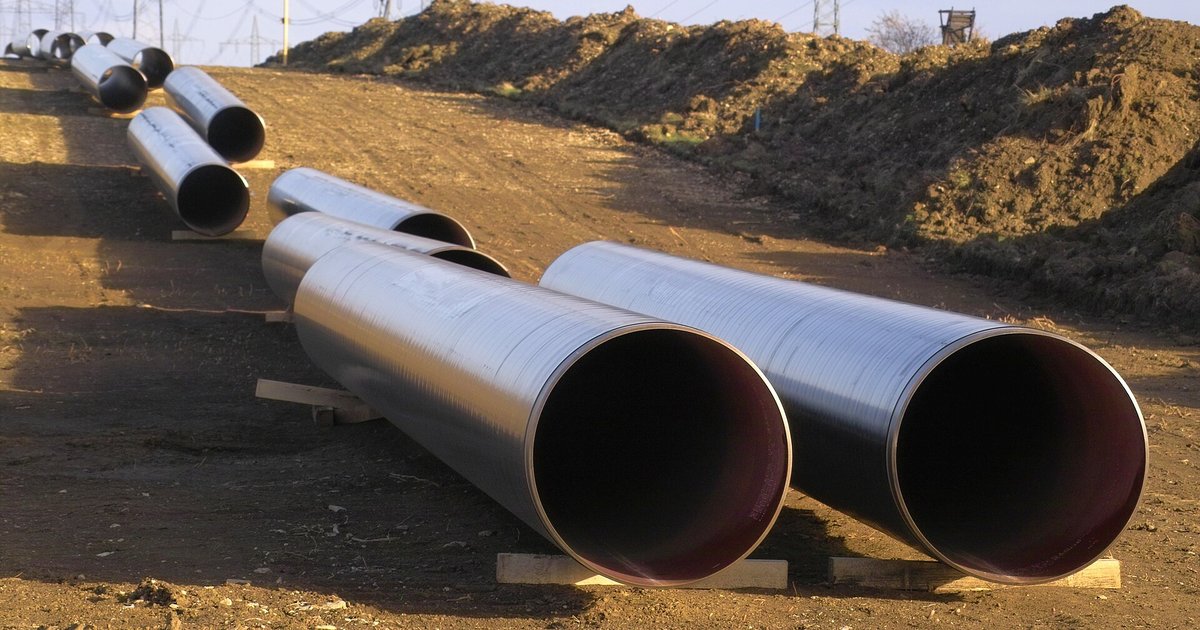
The Bureau of Reclamation has awarded an $81 million contract to Carstensen Contracting for the Block 2-3 pipeline of the San Juan Lateral — the final major segment of the Navajo-Gallup Water Supply Project.
The scope runs from the Frank Chee Willetto Reservoir east of Shiprock to the San Juan Lateral Water Treatment Plant: 42-inch and 48-inch buried transmission pipe, regulating tanks, crossings, valves, cathodic protection, and SCADA and fibre-optic systems. Bart Deming, Reclamation's Western Colorado Area Office manager, called the award a defining moment for the project.
The full scheme spans roughly 300 miles of pipeline, two water treatment plants and 19 pumping plants, and will serve nearly 250,000 people on the Navajo Nation, where more than a third of households lack indoor plumbing. It was authorised under the 2009 Omnibus Public Land Management Act. The San Juan Lateral is more than 75 percent complete, with initial deliveries targeted for late 2028 and full completion by the end of 2029.
The procurement structure is the detail worth noting from a controls perspective. SCADA and fibre are inside the civil contract rather than let as a separate controls package, which puts the integration burden on the civil contractor and fixes the telemetry architecture at construction rather than at commissioning. That is a common arrangement on linear infrastructure and a common source of later friction, because the decisions that determine forty years of operating cost — backhaul, protocol, polling architecture — get made by whoever is scheduling trench work.
Nineteen pumping plants across 300 miles is a textbook distributed-asset monitoring problem, and cathodic protection on 42- and 48-inch buried steel is itself a continuous sensing workload that someone will be reading for decades.