

Seventy-Two Amps Down One Cable
Beckhoff has extended its ECP and ENP hybrid circular connectors across housing sizes B12 to B40 at up to 72 A, conforming to DIN EN IEC 61076-2-118, for machines built without a control cabinet.
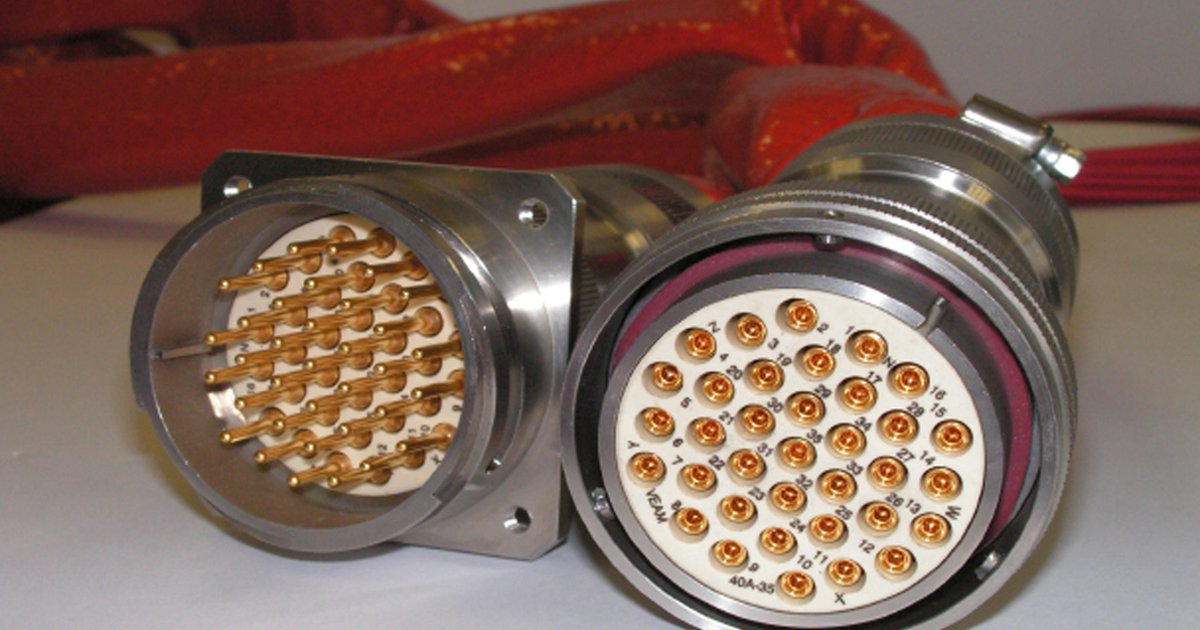
Beckhoff has expanded its ECP and ENP hybrid circular connector families for One Cable Automation, carrying power, signal and data over a single connection. The range now spans housing sizes B12, B17, B23 and B40, with currents up to 72 A, and conforms to DIN EN IEC 61076-2-118, the international specification for circular hybrid connectors. At the I/O level the connectors transmit 24 V DC; high-power configurations support up to 630 V AC or 850 V DC. Beckhoff positions the range for control-cabinet-free architectures in modular machinery and distributed industrial systems, with the stated benefit of reducing cabling complexity while remaining interoperable across multi-vendor networks.
The conformance to a published standard is the detail that separates this from a proprietary connector system, and it is worth more than the current rating. Hybrid connectors have existed for years as vendor-specific ecosystems, and the practical consequence has been lock-in at the cable: choosing a motion vendor meant choosing their connector, their cable assemblies and their lead times. IEC 61076-2-118 makes the mating face a common property, which means second sources, competitive cable assemblies and a realistic chance of repairing a machine without the original supplier.
The cabinet-free argument is the real economic claim and it is a substantial one. A conventional machine has a central enclosure containing drives, power distribution and I/O, plus a wiring loom fanning out to every axis and sensor — which is expensive to build, expensive to document, and the single largest source of commissioning faults, because every one of those terminations was made by hand. Distributing drives and I/O onto the machine and linking them with one hybrid cable per module removes most of the loom and turns a machine into a set of modules that can be built, tested and shipped separately, then connected on site.
The costs are worth naming because they are where projects get caught. The electronics are now on the machine rather than in a ventilated enclosure, so they face vibration, washdown and the local thermal environment directly. A single cable carrying 630 V AC alongside data means EMC design is a connector and cable question rather than a cabinet-layout question, and the cable's bend radius, drag-chain rating and flex life become critical specifications on anything that moves. And fault-finding changes character: a loom is tedious but visible, while a hybrid bus needs diagnostics that report which segment failed. That last point is the one to check during selection rather than after — the connector is standardised, but what the system tells you when it breaks is not.