

Power Budgets for Battery Sensors: Why Ten Years Becomes Eighteen Months
The datasheet says ten years. The field says eighteen months. The gap is always in the same five places, and all of them are calculable before you build anything.
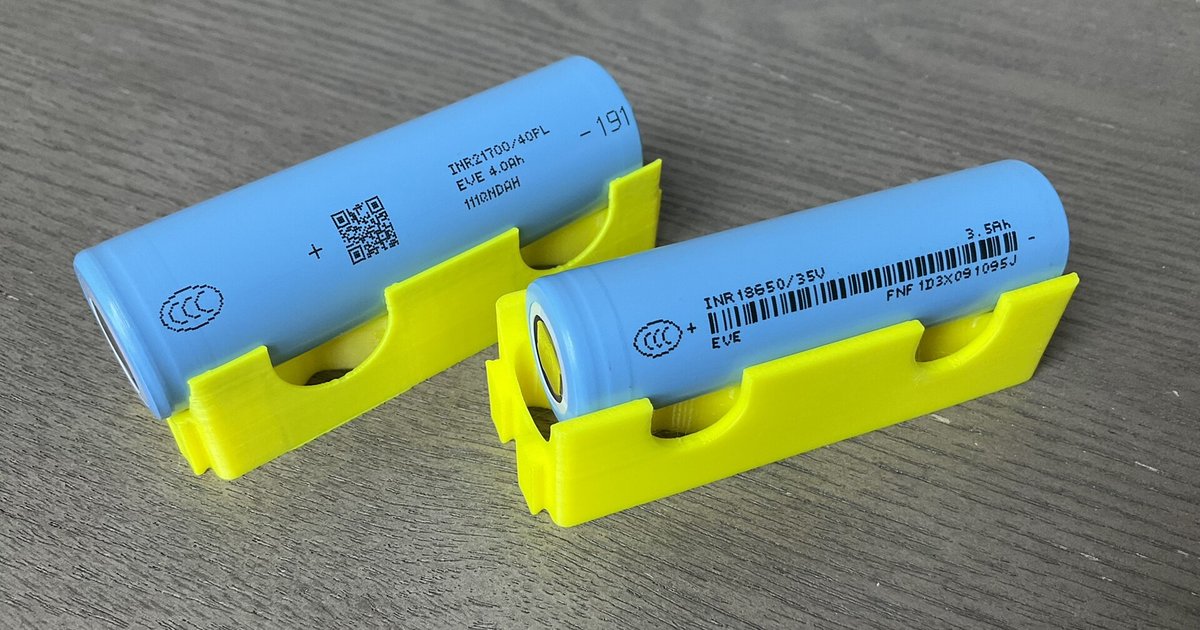
A wireless sensor is quoted at ten years on a single cell. It is installed, and eighteen months later the replacement programme begins. This is such a common outcome that it is worth treating as the default rather than the exception, and the causes are neither mysterious nor unpredictable. Every one of them can be estimated on paper before the first prototype exists.
Start with what the ten-year figure actually is. It is almost always a calculation: cell capacity divided by average current, where average current is derived from a duty cycle the designer chose. It is a statement about a model, not a measurement of a product. The useful question is not whether the number is honest — usually it is — but which assumptions in the model will not hold in the field.
The first gap is the radio, and specifically retries. A transmission budget is normally computed for one transmission per interval. In a real deployment some fraction of transmissions fail and are repeated, and at the edge of coverage that fraction is not small. Worse, most stacks respond to poor link quality by increasing transmit power or, on LoRaWAN, by moving to a slower spreading factor — which multiplies time on air, and time on air is where the energy goes. A node at SF12 can use something like an order of magnitude more energy per message than the same node at SF7. The calculation was done at the good spreading factor. The installation is behind a steel tank.
The second gap is temperature. Battery capacity figures are quoted at room temperature. A lithium thionyl chloride cell at minus twenty delivers meaningfully less usable capacity and, more subtly, develops higher internal impedance, so the voltage sags harder during transmit peaks and the device may brown out long before the cell is actually empty. Outdoor and cold-store deployments routinely lose a third of nameplate capacity this way. In the other direction, high temperature accelerates self-discharge.
The third gap is self-discharge and passivation, which is the part most often left out entirely. A cell loses charge even doing nothing — a percent or two a year for good primary chemistry, considerably more for others. Over a ten-year design life that is a substantial fraction of the total budget, and it is a fixed cost you pay whether or not the device transmits. Thionyl chloride cells also passivate during long idle periods, so the first pulse after a quiet spell sees elevated impedance and a deeper voltage dip than the model predicted.
The fourth gap is sleep current, and it is the one that most often destroys the budget outright. The design targets a few microamps in deep sleep. The built device draws forty, because a pull-up resistor is fighting a pin that idles low, or a sensor's regulator stays enabled, or an unused peripheral was never disabled, or a floating input on a CMOS pin is oscillating, or the debug interface is still powered. At a hundred-to-one duty cycle, sleep current is most of the energy budget, so a thirty-microamp mistake is not a detail — it is the difference between ten years and one. This is measurable in an afternoon with a source meter, and it is the single highest-value measurement in the whole exercise.
The fifth gap is behavioural: the device does more than the model assumed. Someone raises the reporting interval from hourly to every fifteen minutes because the data looked interesting. A firmware update adds a heartbeat. The join procedure, which in the model happened once, happens after every power glitch and is far more expensive than a normal uplink. A gateway outage sends every node in the site into repeated rejoin attempts for two days, and those two days cost months.
So build the budget as a table rather than a single figure, with a line per state: sleep current times sleep time, active current times active time, transmit current times time on air at the worst spreading factor you will accept, plus the join cost times expected joins per year, plus self-discharge, plus a derating factor for temperature. Then apply a margin — the honest one is two, not twenty percent — and quote the result as a range tied to explicit conditions rather than a number.
Two design choices pay for themselves repeatedly. Instrument the battery: report cell voltage under load, not at rest, because voltage at rest tells you almost nothing on a flat-discharge chemistry, while voltage under a transmit pulse tracks impedance and gives real warning. And make the reporting interval a server-side parameter with a floor enforced in firmware, so that the day someone decides they want data every minute, the fleet's life expectancy changes by agreement rather than by accident.