

The Cost of a Wrong Reading
Measurement uncertainty is usually treated as a metrology footnote. Priced properly it is an economic quantity, and it decides how much instrument a given measurement deserves.
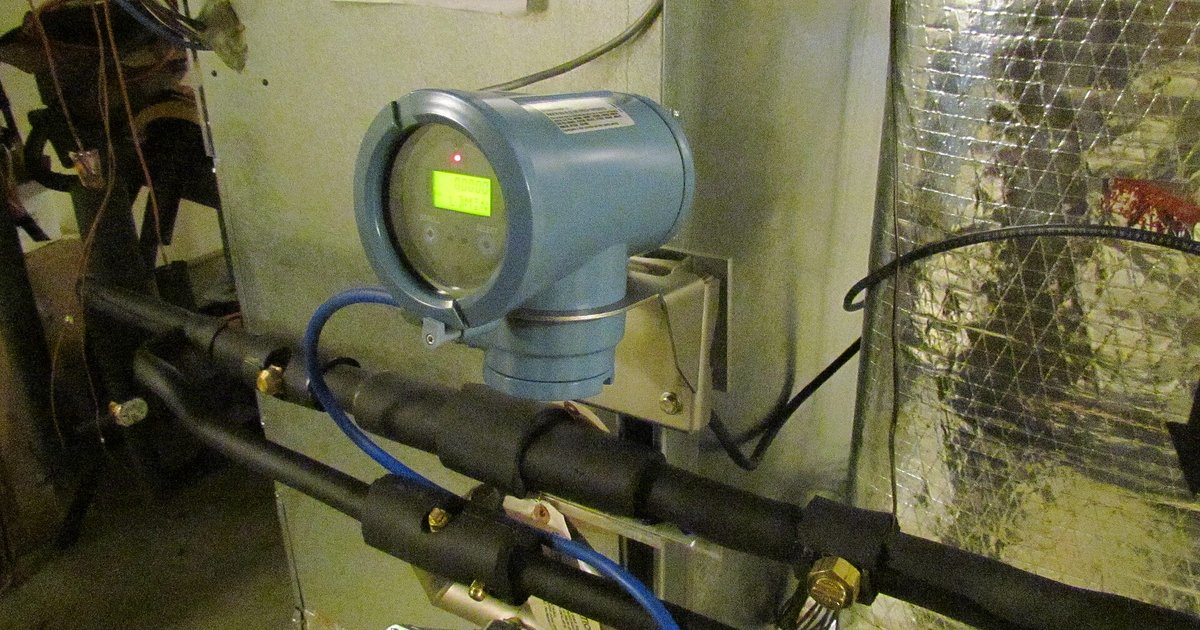
Specifying an instrument usually goes one of two ways. Either the best available accuracy is bought because accuracy sounds like a virtue, or the cheapest thing that fits the range is bought because a measurement is a measurement. Both are guesses. The question that resolves it is economic: what does being wrong by a given amount actually cost, and how often? Once that is written down, the right instrument is usually obvious, and it is often not the one either instinct would have chosen.
Start with the shape of the loss. Some errors cost money continuously and linearly. A custody transfer or utility meter that reads half a percent low gives away half a percent of everything that passes through it, every hour, forever — so on a large flow the annual value of that error dwarfs the price difference between any two instruments, and the expensive meter is trivially justified. Other errors cost nothing until a threshold, then cost a great deal: a temperature measurement in a process with a quality limit is harmless while it is within the band and expensive the moment a batch is misjudged. Others cost only through the reaction they cause — a level reading that trips a pump unnecessarily costs a restart, not a product.
Then there is the direction of the error, which is routinely ignored and often dominates. Measurement error is usually treated as symmetric, but the consequences rarely are. Reading a tank as fuller than it is risks an overflow; reading it as emptier risks running a pump dry; these are not equally priced. In a process with a specification limit, the two failure directions are giving away product and shipping out of specification, and any serious quality organisation prices those very differently. The practical result of asymmetric cost is that you do not centre on the target — you centre offset, deliberately, and the size of the offset is set by the measurement uncertainty. That is the mechanism by which a better instrument pays: a tighter measurement lets you run closer to the limit, and the recovered giveaway is the return on the instrument.
That is the calculation most worth doing, because it converts accuracy into money in one step. Take the specification limit, the current uncertainty, the safety margin that uncertainty forces, the throughput, and the unit value. A thinner margin multiplied by throughput and value is annual benefit. Compare it with the cost of the instrument and its calibration over its life. In fill control, blending, coating thickness, dosing and any process with a minimum-content specification, this arithmetic routinely justifies an instrument several times more expensive than the one installed.
Two technical points make the answer honest. First, the uncertainty that matters is the whole measurement chain, not the sensor's datasheet figure: the sensor, its installation, the transmitter, the wiring, the analogue-to-digital conversion, the scaling, the drift since the last calibration, and the temperature effects on all of the above. A 0.1 percent sensor in a thermowell with a slow time constant on a process that changes quickly is not a 0.1 percent measurement. Second, resolution is not accuracy. A display with four decimal places and a sensor with a one percent error is a device that reports noise precisely, and it is surprisingly effective at persuading people the measurement is good.
There is also a cost to being wrong that is not in the product at all, which is the cost to belief. An instrument that is known to be unreliable gets ignored, and then so does the alarm attached to it, and eventually so does the system it belongs to. An operator who has learned that one reading is untrustworthy will discount all of them, and the value destroyed is not the value of that measurement but of the decisions nobody makes with any of them. This is the argument for fixing or removing a bad instrument rather than leaving it installed and unloved.
So the practical method: for each significant measurement, write one line describing what decision it drives, what the error costs per unit and per event, and in which direction the cost is worse. Rank by that number. Then buy accuracy where the line is expensive and buy adequacy where it is not — and spend the saved money on calibrating the ones that matter more often, which is almost always a better use of it than buying a better instrument for something nobody acts on.