

What Cold-Chain Monitoring Actually Has to Prove
A temperature logger records data. A compliant cold chain produces evidence, which is a different and much harder thing. What the record has to survive, where designs usually fail an audit, and how to build one that does not.
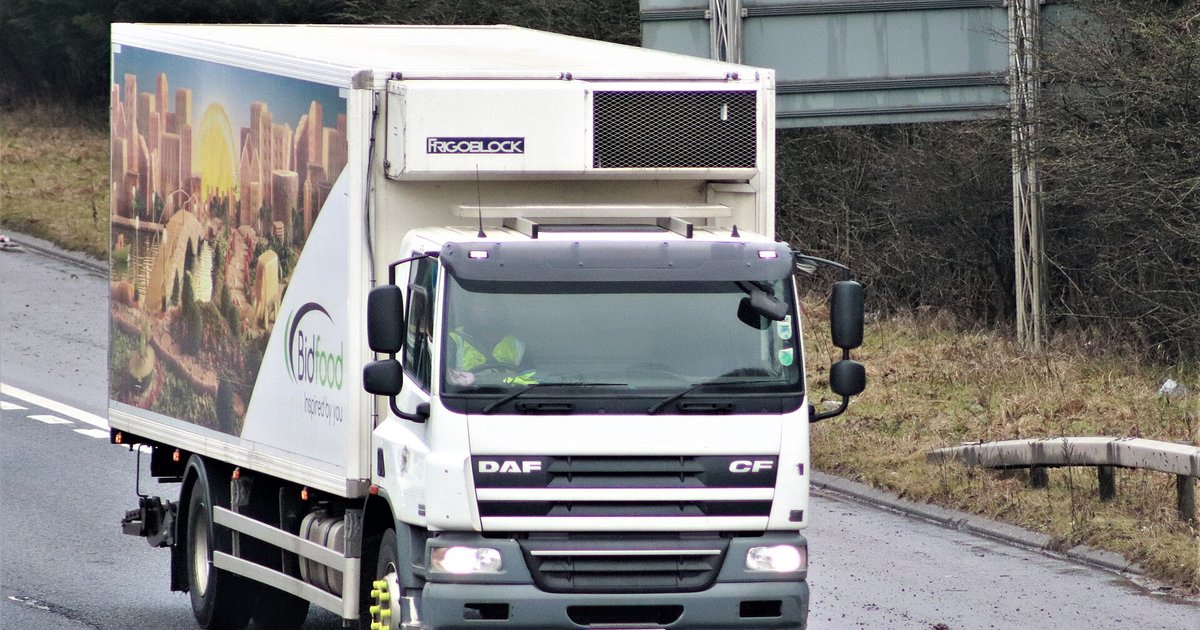
Cold-chain monitoring looks like a solved problem from the outside. Temperature sensors are cheap and accurate, loggers have years of battery life, and a shipment's history can be read off a device in seconds. Deployments still fail, and they usually fail in the same place: the system records data reliably and cannot produce evidence. Those are not the same requirement, and the gap between them is where the engineering actually is.
Evidence means somebody outside your organisation — an auditor, a regulator, a customer rejecting a consignment — can be shown a record and be persuaded by it. That imposes constraints a data-logging design does not naturally satisfy.
The first is calibration, and it is the one that quietly invalidates everything else. A reading is only meaningful if the sensor that produced it was traceable to a standard at the time it produced it. That means a calibration certificate, an interval, a record of which device carried which certificate, and a decision about what happens to data recorded by a device whose calibration has lapsed. Teams routinely deploy hundreds of loggers and discover at the first audit that they cannot say which unit was in which shipment, or when it was last calibrated. The data is fine and it proves nothing.
The second is the excursion definition, which has to exist before the first shipment rather than being argued about after one. Cold-chain limits are rarely a single number. A product may tolerate brief warming but not cumulative time above a threshold; the specification may be written as mean kinetic temperature, or as a permitted number of minutes outside range, or as a hard limit with no allowance at all. A system that alarms on instantaneous threshold crossings when the product specification is cumulative will generate rejections that are not real, and — worse — can pass shipments that should have been rejected. Somebody has to write the rule down, and it has to come from the product, not from the sensor vendor's default.
Third is the sampling interval, which is a trade rather than a setting. Sample too rarely and a short excursion falls between readings, which is exactly the excursion you needed to catch. Sample too often and you shorten battery life, fill memory, and produce a record nobody can review. The interval should be derived from the thermal mass of the packaging: a well-insulated pallet changes temperature slowly and can be sampled every fifteen minutes, while a small parcel handed between vehicles cannot.
Fourth is placement, and it is routinely wrong. A logger taped to the outside of a carton measures the vehicle. A logger in the geometric centre of a pallet measures the best-protected point in the load. Neither is the number that matters, which is the worst case a unit of product experienced. Establishing where that is requires a thermal mapping study of the packaging and the route once, after which the placement is a fixed rule rather than a judgement made by whoever packed the shipment.
Fifth is the chain of custody around the record itself. If a reading can be edited, deleted or re-recorded after the fact, it is not evidence. Regulated environments expect an audit trail: who changed what, when, and why, with the original value retained. That is a database design decision and a permissions decision, and it is far cheaper to make at the start than to retrofit into a system that has been treating readings as ordinary rows.
Sixth, and most often underestimated: what happens when the alarm fires. Real-time monitoring is only worth its cost if somebody can act inside the window where action still helps. An alert about a reefer unit that has drifted out of range at 03:00 is valuable if it reaches a driver who can restart the unit, and worthless if it reaches a dashboard reviewed on Monday. The value is in the response path, not the sensing, and the response path is an operational commitment rather than a purchase.
There is a design consequence in all of this. A shipment logger and a live tracker solve different problems and cost differently — one proves what happened, the other lets you intervene while it is happening — and a lot of disappointment comes from buying one and expecting the other. Most operations need both, on different lanes: full real-time visibility on high-value or high-risk routes, and passive loggers with a robust download and archive process everywhere else.
The unglamorous summary is that the sensor is the easy part. The record-keeping, the calibration programme, the written excursion rule and the person who answers the alarm at three in the morning are the system, and they are what an audit actually examines.